
Pharmaceutical
Human APIs Powder
- Respiratory Drugs Raw Material
- Antiviral Antibacterial
- Antipyretic Analgesics
- Antihistamine Drugs
- Antineoplastic
- Cosmetic Raw Material
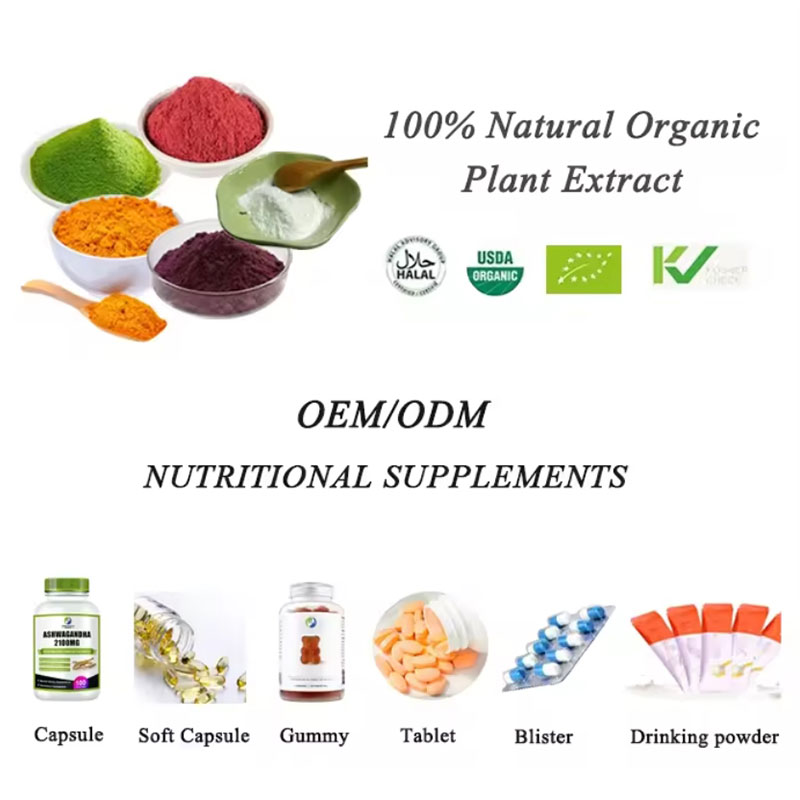
OEM & ODM
- Capsule
- Softgel Capsule
- Gummies
- Drop & drinks
- Tablets
- Effervescent Tablet
- Gel
- Powder
- Chewing Gum
- Pet Supplement
Veterinary raw materials
Phone: 86-18419147460
E-mail: sales03@nutritionoem.com
Add: Fengcheng 2nd Road, Weiyang District, Xi'an, Shaanxi, China
Food grade Ferrous Gluconate Dihydrate powder supplier


Product Overview:
Ferrous gluconate salts are a commonly used iron supplement and are categorized into two groups: inorganic and organic iron. Inorganic iron is represented by ferrous sulfate, and organic iron includes iron dextrose, ferrous gluconate, iron sorbitol, ferrous fumarate, ferrous succinate, ferrous proteinsuccinate, and polysaccharide iron complexes.
Among them, heme iron is more readily absorbed than non-heme iron, organic iron is more readily absorbed than inorganic iron, and divalent iron is more readily absorbed than trivalent iron. Organic iron is less irritating to the gastrointestinal tract and has fewer adverse effects than inorganic iron, but it is slightly more expensive.
Product Attributes
CAS: 12389-15-0
MF: C12H26FeO16

MW: 482.17
Specification: 99% min Ferrous Gluconate Dihydrate powder
Sample: Ferrous Gluconate Dihydrate powder Avaliable
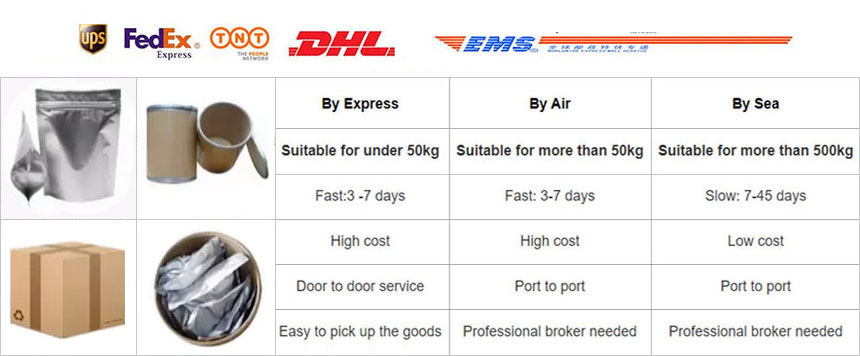
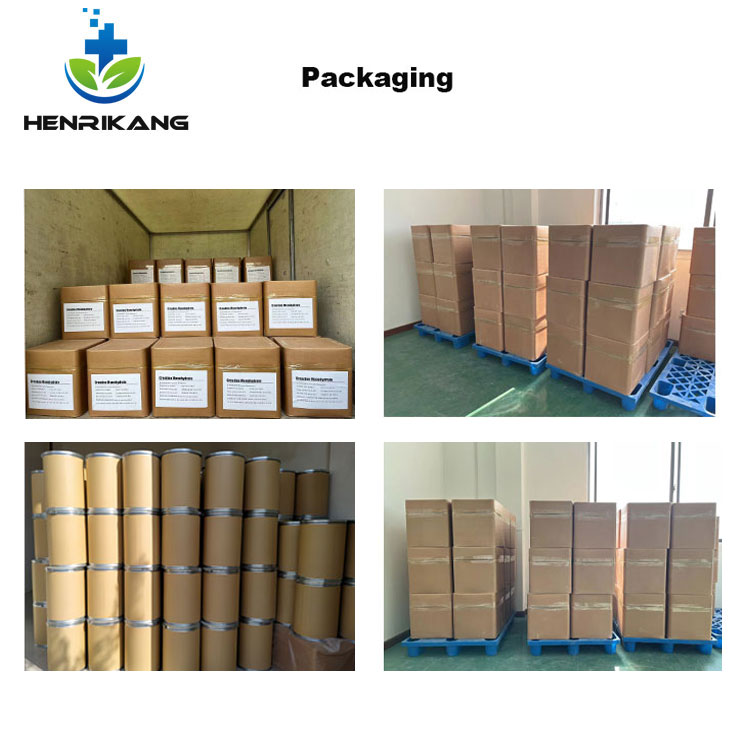
Packaging:1kg/bag, 25kg/drum
Brand: Ausreson
MOQ: 1 kg
Appearance: White powder
Storage: Cool Dry Place
Shelf Life: 2 Years
Test Method: HPLC
Product Details
What is Ferrous Gluconate Dihydrate?
Ferrous Gluconate Dihydrate (C₁₂H₂₂FeO₁₄·2H₂O) is a key organic iron compound utilized across the food, nutritional, and pharmaceutical industries. Chemically defined as iron(II) di-D-gluconate dihydrate, it appears as a fine pale greenish-yellow to yellowish-grey powder or granules, sometimes with a faint, characteristic odour of burnt sugar.
Primarily manufactured by reacting hot solutions of barium or calcium gluconate with ferrous sulfate, it is prized for its high solubility in water and its exceptional bioavailability—the ease with which the human body can absorb and utilize the iron
Ferrous Gluconate Dihydrate powder Usage and Synthesis.
Ferrous gluconate is a color protectant and nutrient fortifier commonly used in foods. It is characterized by high bioavailability, good solubility, and a calm, non-astringent flavor.
Ferrous gluconate can be obtained by neutralizing reduced iron with gluconic acid, or by heating an aqueous solution of ferrous carbonate and gluconic acid. Ferrous gluconate has good solubility in water, but excessive fortification in milk beverages is likely to cause changes in food color and flavor.
Ferrous gluconate is used medically as a drug for the treatment of diseases such as anemia. Its pharmacological effects include increasing hemoglobin levels and improving the morphology of blood red blood cells. The dosage of Ferrous Gluconate needs to be based on the patient's specific condition, and the adverse reactions and interactions of the drug need to be noted.
When taking ferrous gluconate, you need to pay attention to the interaction with milk, tea and other foods. The proteins and phosphorus in milk can affect the absorption of iron, while the tannins in tea can form precipitates with iron and reduce the absorption of iron.
Uses and functions of Ferrous Gluconate Dihydrate powder.
Ferrous gluconate salt is a commonly used drug, mainly for the treatment of iron deficiency anemia.
In addition, it is used as a food additive to impart acidity, enhance the flavor of foods, prevent protein denaturation, improve undesirable bitter and astringent tastes, and replace salt to obtain low-sodium and sodium-free foods.
Ferrous gluconate salt has high bioavailability, good solubility, and a calm, non-astringent flavor, but it is more fortified in milk beverages and is also prone to cause changes in food color and flavor.
Preparation of Ferrous Gluconate Dihydrate powder.
Product Method of Bulk Ferrous Gluconate Dihydrate powder.
(1) Direct method. Calcium glucose and ferrous sulfate in the presence of a small amount of iron powder in the reaction at 90 ℃ for 10h, you can get the product, the yield of 97.8%. The method is simple, but the residual amount of calcium sulfate is too high and difficult to remove.
(2) Acid method. Add 1.2 mol/L calcium gluconate to the same amount of sulfuric acid solution under stirring, and react at 90 ℃ for 1h; after filtration to remove the precipitated calcium sulfate precipitate, pass the column at a flow rate equivalent to the volume of the resin per minute, and get about 35% of the gluconic acid solution, yield 97%.
Ferrous sulfate powder is added to calcium carbonate solution, stirring to dissolve and react to produce ferrous carbonate precipitate: after the end of the reaction is filtered, washed to get ferrous carbonate (do not drain, the surface retains a layer of water in order to isolate the air), yield 98%.
Then add the ferrous carbonate into the gluconic acid solution stirring reaction for 30min, the reaction of CO2 generated as an inert gas to play a protective role. The product ferrous gluconate solution was put into the crystallization tank, and add the crystal seed, about 3-5h crystallization is completed. Finally filtered and washed with ethanol, 50 ℃ vacuum drying that is the finished product, yield 98%.
Frequently Asked QuestionsWhat is the difference between Ferrous Gluconate and Ferrous Gluconate Dihydrate?
Ferrous Gluconate Dihydrate is the specific, hydrated form of the compound, containing two water molecules (dihydrate) in its crystal structure. This is the form commonly standardized and traded for industrial use. The term "Ferrous Gluconate" is often used generically to refer to this material.
Is Ferrous Gluconate Dihydrate safe for use in food?
Yes, when produced according to good manufacturing practices and meeting established purity criteria. It is approved as a food additive (E 579) in the European Union for specific applications and is GRAS-affirmed in the United States as a nutrient supplement.
What are the advantages of using Ferrous Gluconate over other iron salts (like Ferrous Sulfate)?
The primary advantages are higher bioavailability and better gastrointestinal tolerance. Ferrous Gluconate is generally less irritating to the digestive tract than Ferrous Sulfate. It also has a milder, less metallic taste, making it more suitable for food fortification.
How should Ferrous Gluconate Dihydrate be stored?
It should be stored in a cool, dry place, in a tightly sealed container to protect it from moisture and light. These conditions help maintain its stability and prevent oxidation.
Can this ingredient be used in dietary supplements?
Absolutely. Its high bioavailability and favourable tolerability profile make Ferrous Gluconate Dihydrate a very common and effective source of iron in multivitamin/mineral supplements and standalone iron supplements
Поставщик порошка пищевого глюконата железа (II) дигидрата
Fournisseur de poudre de gluconate ferreux dihydraté qualité alimentaire
Lieferant von Lebensmittelqualität Eisen(II)-gluconat-Dihydrat Pulver
Proveedor de polvo de gluconato ferroso dihidratado de grado alimentario
Fornecedor de pó de gluconato ferroso di-hidratado grau alimentício
Inquire This Product